
Home Blog

16-Year-Old Shriyan Avadhanula Builds Platforms Used by Thousands

0
Screenshot

Shriyan Avadhanula is a 16-year-old Virginia high-school student building technology across education, finance, cybersecurity, artificial intelligence, privacy and wearable technology. His projects include Scholark, a free college-planning platform that publicly reports more than 10,000 monthly students; Capital Mastery, a free finance-training and career-readiness platform; DataShadow, a personal-data management prototype connected to a U.S. provisional patent application; and OpenLens, a project focused on researching and testing smart-glasses capabilities.
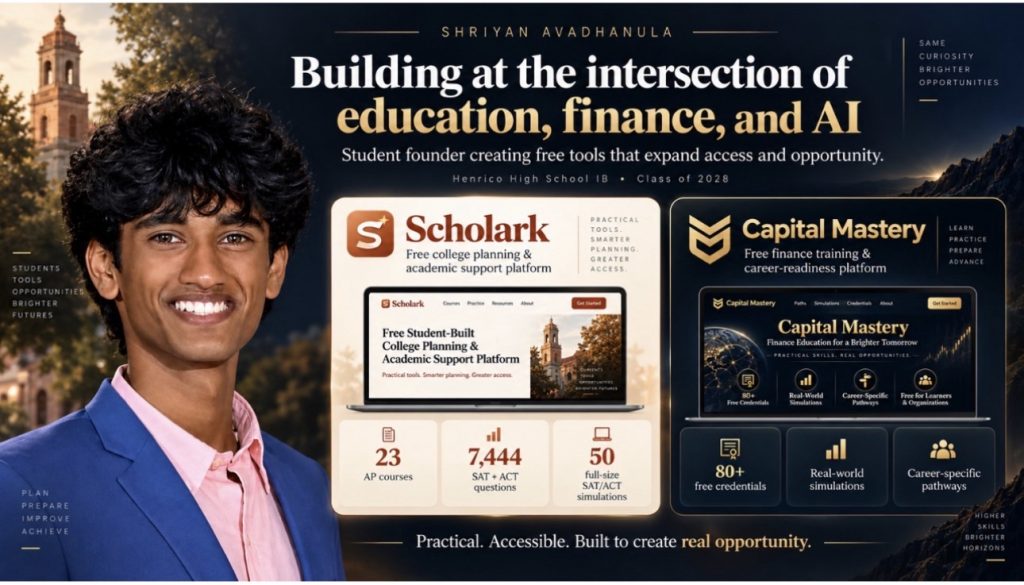
Shriyan Avadhanula with Scholark and Capital Mastery platforms
Image: Shriyan Avadhanula with Scholark and Capital Mastery. Supplied by Shriyan Avadhanula.

By Shriyan Avadhanula and Daniel Jeddman

The 16-Year-Old Building Beyond the Classroom

For most 16-year-olds, an 11th-grade school day ends when the final bell rings. For Shriyan Avadhanula, it can be the point at which another working day begins.

The Virginia student has built Scholark, a free college-planning and academic-support platform that publicly reports more than 10,000 monthly students. He has also developed Capital Mastery, a free finance-training and career-readiness platform; created DataShadow, a personal-data management prototype for which he says he filed a U.S. provisional patent application as sole inventor; and worked on OpenLens, a project focused on understanding and testing smart-glasses capabilities.

The projects span education, finance, cybersecurity, artificial intelligence, privacy and wearable technology.

But Avadhanula’s approach is not simply to collect projects. His stated philosophy is to build something when he encounters a problem he believes software can solve.

“If I think about it long enough, I usually end up making my own version.”

Scholark Started With a GPA Problem

The story of Scholark began with something considerably less ambitious than a 10,000-user platform.

Avadhanula wanted a better way to calculate and track his grades. That initial GPA tool gradually expanded. College research followed. Then test preparation. Application planning. Scholarship resources. Essay support. Study planning and other academic tools.

Today, the official Scholark website describes the project as an independent, student-built, non-commercial educational project, rather than an incorporated company or employer. It lists more than 10,000 students monthly and offers calculators, college-comparison tools, SAT/ACT preparation, AP study tools, an essay coach, scholarship resources and application-planning features.

The platform’s central proposition is straightforward: students should be able to access useful academic tools without having to pay to unlock the important parts.

Avadhanula is also candid about what a platform such as Scholark cannot do. He does not describe its admissions tools as guarantees or as replacements for professional counselors. Instead, he sees them as practical tools for students who want to calculate, compare, organize and prepare.

The Economics of Free

There is another question behind Scholark: How does a free platform survive?

Servers cost money. Software requires maintenance. Products require development time.

Avadhanula has kept infrastructure costs relatively low, according to his account, while exploring how the project could eventually become sustainable without abandoning its accessibility.

For now, Scholark’s public description says it is non-commercial and not revenue-generating.

From Education Into Finance

If Scholark began with a student’s frustration over college preparation, Capital Mastery emerged from a different frustration: knowing finance concepts is not necessarily the same as being able to perform finance work.

Avadhanula became particularly interested in investment banking and mergers and acquisitions. He completed finance courses and professional-learning programmes and began examining the difference between learning a concept and actually applying it.

A student might understand comparable-company analysis. That does not automatically mean the student knows which companies should actually be selected.

img 6595
Photo: A student works on a laptop with an instructor nearby. Mikhail Nilov / Pexels [7].

A student might understand enterprise value. That does not necessarily mean the student can build a valuation, make assumptions, test those assumptions and explain why the conclusion makes sense.

Capital Mastery was designed around that gap.

The Capital Mastery platform describes a free finance-training and career-readiness system covering numerous career paths, including investment banking, private equity, venture capital, corporate development, sales and trading, quantitative finance, FP&A, risk management, wealth management and real estate.

The training model goes beyond conventional lessons. It includes simulations, valuation and modelling exercises, research assignments, spreadsheet-style work, case-based exercises and scenario-driven decision-making.

The platform says it offers 80+ free credentials.

Its public materials also describe an employer-facing layer intended for pre-onboarding, intern training and early-career development.

When a Student-Built Platform Meets a Real Finance Firm

One of the most significant developments came when the project moved beyond Avadhanula’s own computer.

According to the supplied material for this profile, Sterling Point Advisors, a boutique M&A advisory firm, agreed to use Capital Mastery as an in-house training resource for interns. Avadhanula says other firms in the United States are also using or considering the platform.

The significance for Avadhanula is less about the appearance of a polished website and more about whether the system works for people who actually perform the jobs being simulated.

“Once somebody in the industry is actually going to use it for training, you care a lot less about how fancy the platform looks and a lot more about whether it works.”

His own M&A mentorship has reportedly reinforced that principle. A finance professional reviews his analyses and challenges assumptions, comparable-company selections and valuation logic.

Sometimes the answer does not survive the review.

For Avadhanula, that is part of the education.

“When someone who actually does this finds a weakness in your reasoning, you remember it.”

DataShadow: Turning Personal Data Into Something People Can Understand

His next project moves into a much more complicated area: personal data.

People generate enormous amounts of information through searches, purchases, locations, preferences and online activity. Companies can extract value from those signals. But individuals often have limited visibility into how their data is interpreted, what is inferred from it or how it could potentially be valued.

DataShadow is Avadhanula’s attempt to explore what would happen if the individual had more control.

The project’s public documentation describes a local-first functional prototype that allows users to import supported information, configure consent rules, examine derived assets, explore privacy transformations and maintain a local ledger. It also explicitly distinguishes simulated marketplace activity and modeled outcomes from real commercial transactions.

That distinction is central to the project’s design philosophy. A prototype should not present a simulation as if it were an operating market. A hypothetical buyer should not be presented as a real buyer. A modeled financial outcome should not be represented as money that has actually changed hands.

DataShadow’s public documentation explicitly identifies its buyer-demand and monetary-outcome components as synthetic prototype scenarios.

A Patent Filing at 16

According to DataShadow’s public documentation, Shriyan Avadhanula filed a U.S. provisional patent application on August 19, 2026, covering the system’s integrated personal-data asset-management architecture.

The project identifies him as the sole inventor and says the filing was made when he was 16.

Avadhanula also publicly announced the milestone on LinkedIn, describing DataShadow as a working prototype built around the idea that individuals should have greater control over personal data, including how it is accessed, protected and potentially valued.

A provisional patent application should not be confused with an issued patent. The filing establishes an important intellectual-property milestone, but it does not mean a patent has already been granted.

OpenLens and the Smart-Glasses Question

Avadhanula’s interests extend from software into hardware.

OpenLens is presented as an attempt to make the increasingly complicated smart-glasses ecosystem easier to understand.

Smart glasses differ significantly in their hardware. Some have displays. Some do not. Cameras, microphones, sensors, developer access, processing capability and power constraints vary between devices.

A software experience that works on one device may be impossible on another.

OpenLens is designed around research, simulation and benchmarking, with an emphasis on distinguishing manufacturer specifications from simulated behaviour and actual capabilities.

A Bridge From Virginia to Shenzhen

According to the materials supplied for this article, Avadhanula received an invitation from Edison Li of RX Global to attend the 2026 Shenzhen International AI+AR Smart Glasses Industry Expo in China.

The event itself is independently documented by its official organizer. The organizer lists the Shenzhen International AI+AR Smart Glasses Industry Expo for October 27–29, 2026, in Shenzhen, alongside a projected exhibition scale of more than 170,000 visitors and 3,600 exhibitors and brands across concurrent exhibitions.

The invitation itself is based on the supplied correspondence and should therefore be understood as an attributed detail rather than independently established by the event’s public website.

For Avadhanula, however, the significance is straightforward.

A simulator can reproduce a device’s behaviour only to a point. Eventually, developers have to understand the people designing the hardware, the components involved, the optical systems, the engineering constraints and the manufacturers building the products.

“I can build a simulator on my laptop. I can’t simulate the whole industry.”

More Than One Project

There are other projects in the portfolio.

ATHENA, an athlete-intelligence project he co-founded, is described in the supplied materials as having been tested across 27,548 athletes and 155,109 real-world race records.

Scholark’s public biography also lists those figures.

He has also worked on DinkSense, a performance-analytics project for pickleball, a sport he plays competitively.

Another strand of his work is cybersecurity. He produces an annual Cyber Risk Intelligence Report, treating cybersecurity not only as a technical problem but also as a business and financial risk.

The Numbers Tell Only Part of the Story

There are plenty of numbers attached to the story.

More than 10,000 monthly Scholark users. More than 80 Capital Mastery credentials. More than 30 professional-learning credentials and certifications. A provisional patent application. More than 27,000 athletes and 155,000 race records in ATHENA’s reported validation dataset. An invitation connected to a major international smart-glasses exhibition.

But the numbers are not necessarily the most interesting part.

The more consequential question is whether the systems continue to work when people outside the creator’s immediate circle begin testing them.

That is particularly important for a young developer. A project can look impressive when it is controlled by the person who built it. It becomes much more meaningful when students use it, professionals challenge it, organizations train with it or developers depend on it.

Avadhanula understands that distinction.

“I don’t want it to be a list.”

Being 16 Is Not the Product

There is an unavoidable novelty to the story. Ten thousand users sounds different when the creator is 16. So does filing a provisional patent. So does building finance-training software aimed at professionals while still completing high school.

But age has a shelf life.

Next year, Avadhanula will be 17. Eventually, the description “teen founder” will disappear altogether.

What remains will be the products.

Scholark will have to continue serving students. Capital Mastery will have to demonstrate that its training is useful to learners and organizations. DataShadow will have to withstand scrutiny from people with years of experience in privacy, cybersecurity, law and data markets. OpenLens will have to prove that developers and hardware researchers can actually use it.

The projects will have to survive beyond the novelty of their creator’s age.

That is exactly the standard Avadhanula appears to be setting for himself.

“Being 16 might get someone to look once. It can’t be the reason they come back.”

Learning by Building

There is a conventional route to professional qualification: study, credential, experience, then the difficult work.

Avadhanula’s path has been less linear.

He studies something, builds something and discovers the gap between what he thinks he understands and what the real problem demands. Then he returns to the gap.

That cycle appears repeatedly across his projects.

It is also why his finance work has involved mentorship, why his data project explicitly distinguishes simulations from reality and why OpenLens is designed around hardware limitations rather than pretending every device can do everything.

He does not present every project as guaranteed to succeed.

Some will change. Some may fail. Some may become larger than expected.

A provisional patent may never become an issued patent. A free platform may eventually need a different economic model. A prototype may reveal that the original idea needs to be rebuilt.

Those are normal possibilities in technology.

A Collaboration With Daniel Jeddman

The story also has a Ghanaian connection.

Avadhanula has collaborated with Daniel Jeddman, the Ghanaian journalist, publisher and digital creator behind GhanaNews.org & GhanaMedia.net, as part of the development and publication of this profile.

d2b6ac44 5e6d 4337 b1d3 848277007aa3
16-Year-Old Shriyan Avadhanula Builds Platforms Used by Thousands 4

The collaboration reflects a wider connection between the United States and Ghana through technology, media and young innovators building across borders.

For GhanaMedia, Avadhanula’s story is not simply about a teenager who has accumulated an impressive résumé.

It is about what can happen when a young person identifies a problem, builds an initial solution, allows other people to test it and keeps learning from the weaknesses that emerge.

Because starting young is not, by itself, an achievement that guarantees future success.

The more meaningful question is what the additional years can produce.

Avadhanula puts it simply:

“I don’t want starting young to be the accomplishment. I want it to mean I had more time to get better.”

What Comes Next

Somewhere, a student opens Scholark and calculates a grade. Another compares colleges. Another practices for an exam. A finance learner works through a Capital Mastery simulation. A developer examines a smart-glasses capability. A user experiments with DataShadow’s privacy architecture.

Those users may never know who built the tools.

And that, perhaps, is the most practical measure of whether the work succeeds.

The technology does its job. The user gets what they came for.

At 16, Shriyan Avadhanula is still at the beginning of his story.

The platforms are already being built. The users are already arriving. And the harder question — whether these ideas can mature into durable systems that matter beyond their creator — is only beginning.

Contact Shriyan: Gmail | LinkedIn

Follow GhanaMedia on X: @GhanaMedia123

Ghana News | Ghana News Live | Top Stories | Policy & Law Hub

NCA Awards 3 Spectrum Lots to Telecel Ghana for 5G Expansion

0

The National Communications Authority (NCA) has awarded three spectrum lots in the 2.3 GHz band to Telecel Ghana, supporting the company’s preparations to expand 5G services and increase mobile broadband capacity.

Telecel secured all three lots for which it applied as part of the NCA’s competitive licensing process covering the 700 MHz, 2.3 GHz and 3 GHz bands.

img 6593
NCA Awards 3 Spectrum Lots to Telecel Ghana for 5G Expansion 6

Telecel Ghana’s Director of External Affairs, Komla Buami, said the additional spectrum would strengthen the company’s network expansion and help improve service quality for customers.

“This award is an important step in our preparations for the rollout of 5G,” Buami said.

He added that the additional capacity would contribute to customer experience and Ghana’s wider digital economy.

The assignment comes after the NCA’s ongoing spectrum licensing exercise. On September 11, the regulator reported that five lots were available in the 2.3 GHz band, with four lots applied for at that stage, leaving the band under-subscribed. The NCA said the final outcome for the 2.3 GHz and 3 GHz bands would be announced after the remaining stages of the process.

Telecel’s latest award therefore represents a further development in the licensing process.

The company said it also looks forward to continued engagement with the NCA on spectrum rationalisation, arguing that efficient spectrum management can support network investment and meet Ghana’s growing demand for mobile services.

The NCA began the current licensing process in July 2026, inviting applications for spectrum licences in the 700 MHz, 2.3 GHz and 3 GHz bands for mobile broadband services, including 5G.

Three applicants — MTN Ghana, Telecel Ghana and Goal Telecommunications — qualified for the next stage after the NCA assessed four applications. Infrava Ltd was the only applicant that did not qualify.

The development adds another step to Ghana’s ongoing expansion of 5G and mobile broadband infrastructure.

Follow GhanaMedia on X: @GhanaMedia123 for more technology and business updates.

Ghana News | Ghana News Live | Top Stories | Policy & Law Hub

Julius Debrah to Open APSCA 2026 in Accra

0
Screenshot

Ghana’s Chief of Staff, Julius Debrah, is listed among the headline speakers for the 7th Africa Public Sector Conference & Awards (APSCA 2026), scheduled to take place in Accra from October 14–16, 2026.

The conference will be held at the Kempinski Hotel Gold Coast City under the theme, “Governance 2030: Resilient Institutions for a Digital, Green & Secure Africa.”

img 6548
Julius Debrah among headline speakers as African public-sector leaders prepare to converge in Accra.

According to the organisers, APSCA 2026 will bring together more than 300 senior decision-makers from over 10 African countries, including government officials, public-sector executives, policymakers, business leaders and institutional stakeholders.

Julius Debrah Among Headline Speakers

The official APSCA programme lists Julius Debrah, Chief of Staff of the Republic of Ghana, among the distinguished speakers for the conference.

The event materials supplied to GhanaMedia say Debrah is expected to deliver a keynote address focusing on leadership, government coordination and institutional resilience.

The conference is designed to examine how African governments and institutions can strengthen public-sector systems while responding to digital transformation, environmental pressures and security challenges.

Kenya and Nigeria to Feature Prominently

Kenya’s Felix K. Koskei, Chief of Staff and Head of Public Service, is also listed as a speaker and is expected to lead Kenya’s participation at the conference.

Nigeria’s Professor Nentawe Goshwe Yilwatda, National Chairman of the All Progressives Congress (APC), is also scheduled to participate. The official APSCA website lists him among the conference speakers.

Yilwatda is expected to address the role of governing political parties in building institutions capable of supporting digital, green and secure governance.

12 Specialised Forums

APSCA 2026 will feature 12 specialised forums covering areas including governance and institutional leadership, public procurement, public finance, energy, trade, digital government, education, public-private partnerships, ESG and sustainability, customer experience and youth empowerment.

The official programme describes the event as a platform for high-level discussions, practical conversations, networking and recognition of public-sector achievements.

Made in Africa Festival

A Made in Africa Festival will also run alongside APSCA 2026, giving participating countries and organisations an opportunity to showcase innovation, technology, infrastructure, trade and other locally developed solutions.

The conference organisers say the exhibition will connect African delegations with governments, investors, development partners and businesses.

Ghana Prepares to Host Continental Governance Dialogue

With senior officials from Ghana, Kenya, Nigeria and other African countries listed among the participants, APSCA 2026 is set to provide a platform for discussions around institutional development, public-sector transformation and governance.

The three-day conference will take place at the Kempinski Hotel Gold Coast City, Accra, from October 14–16, 2026.

By GhanaMedia.net | Governance & Business Desk

Follow @GhanaMedia123 on X for the latest Ghana and African news updates.

Ewoyaa Communities Question Whether Lithium Consultations Met FPIC Standards

0

Concerns over information, participation, compensation and community consent resurface as Ghana’s Ewoyaa lithium project advances toward development.

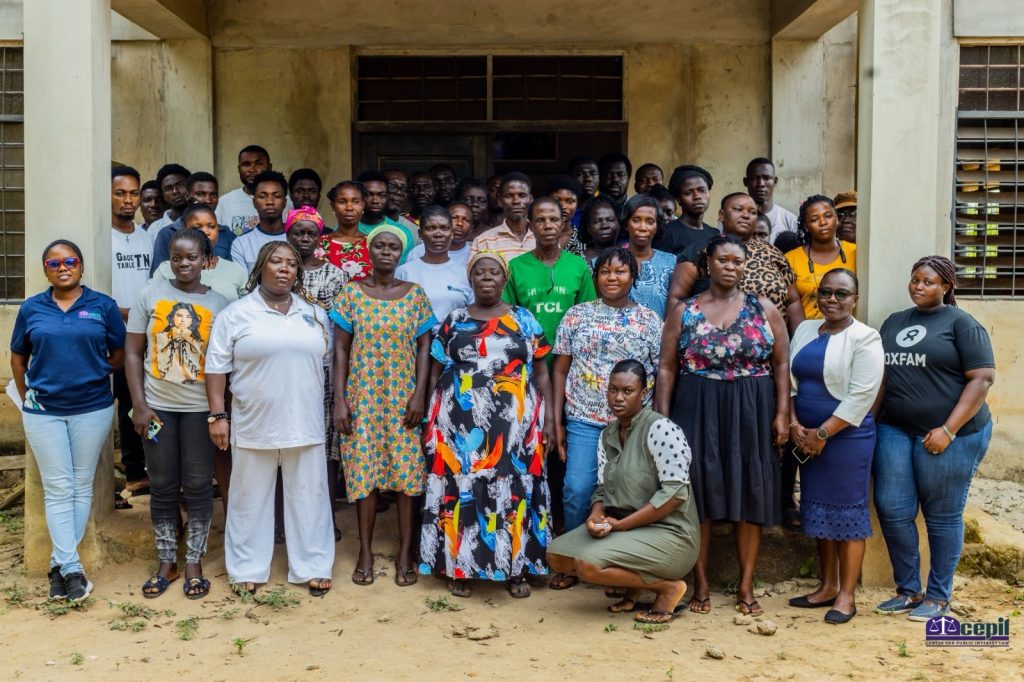
Communities affected by Ghana’s emerging Ewoyaa lithium project are questioning whether earlier consultations surrounding the project adequately met the principles of Free, Prior and Informed Consent (FPIC).

The concerns were raised, according to organisers, during a town-hall dialogue on FPIC organised by the Centre for Public Interest Law (CEPIL) under the Feminist Mineral Initiative, with funding from Oxfam in Ghana.

98b8b7b1 3fc0 4539 b587 6ec6e1c1853c 1
Ewoyaa Communities Question Whether Lithium Consultations Met FPIC Standards 9

Participants reportedly asked how FPIC differs from consultations already conducted around the Ewoyaa project and whether previous engagements gave affected communities sufficient information and meaningful opportunity to influence decisions affecting their land and livelihoods.

What Does FPIC Mean?

FPIC is generally understood as a process requiring communities to receive relevant information, participate meaningfully in decisions and have their consent sought without coercion or manipulation.

The “free” element means participation should not be obtained through threats, intimidation, manipulation or improper pressure.

“Prior” means consent should be sought before relevant decisions or activities are undertaken.

“Informed” means communities should receive adequate and understandable information about a project’s potential risks, impacts, benefits and alternatives.

The consent component concerns whether communities have meaningful decision-making power rather than merely being informed after important decisions have already been made.

Oxfam has long advocated for FPIC in extractive-industry projects, while regional guidance has emphasised community consent and continuing consultation throughout the mining cycle.

Ewoyaa Project Enters a Critical Phase

The Ewoyaa Lithium Project is located in Ghana’s Central Region around the Ewoyaa-Saltpond area.

The project involves communities including Ewoyaa, Krofu, Abonko, Anokyi, Krampakrom, Afrangua and Ansaadze.

Wacam’s recent work in these seven communities found that many women still had limited information about land acquisition, compensation, resettlement, environmental impacts and health concerns.

The project reached an important regulatory milestone in March 2026 when Parliament approved the mining lease agreement between the government and Barari DV Ghana Limited, covering 42.63 square kilometres.

The agreement provides for a 15-year mining lease and includes a community development fund financed from company revenue.

The approval has moved the project closer to development, making questions around compensation, resettlement, community participation and environmental safeguards increasingly important.

Previous Concerns Over Community Rights

The latest questions come against a backdrop of documented concerns among affected communities.

A five-year study by Friends of the Nation, reported by the Ghana News Agency in July 2026, found alleged violations of farmers’ rights during the exploration period, including claims involving inadequate compensation and farms being entered without adequate prior notice.

The report also highlighted the very low representation of women on some community negotiation committees.

Atlantic Lithium, through an official response reported by GNA, disputed the allegation that it had infringed stakeholders’ rights and said landowners whose farms were entered during exploration had been notified through traditional authorities.

The existence of community concerns does not by itself establish that the company violated FPIC requirements. It does, however, demonstrate why questions about participation, information and consent remain relevant.

Communities Seek Practical Access to Information

Participants at the reported CEPIL dialogue also sought guidance on how residents can obtain information from the company and government to make informed decisions.

The organisers reportedly identified the need for accessible channels through which residents can request project information, raise concerns and understand decisions affecting their communities.

That issue echoes findings from Wacam’s 2026 engagement with women in the seven project communities, where participants identified gaps in knowledge concerning land acquisition, compensation, resettlement, environmental impacts and grievance mechanisms.

Consent Cannot Be Reduced to a Single Meeting

One of the central questions emerging from the discussion is whether community engagement should be treated as a single consultation exercise or an ongoing process throughout the life of a mining project.

For affected residents, decisions concerning land, resettlement, compensation, environmental protection and livelihoods can have consequences extending far beyond the initial approval of a mining lease.

The challenge is therefore not simply whether consultations occurred, but whether affected communities had sufficient information, adequate representation and meaningful opportunities to influence decisions before those decisions were finalised.

That question becomes especially significant as Ghana seeks to develop its lithium resources while positioning the mineral as part of the country’s participation in the global clean-energy economy.

The Bigger Question for Ewoyaa

Ghana’s Ewoyaa project presents an important test of how the country balances mineral development with community rights.

The project has the potential to generate economic activity, government revenue and local development opportunities. At the same time, affected communities face questions about farmland, compensation, resettlement, environmental protection and long-term livelihoods.

For civil-society organisations and community advocates, the argument is that development should not simply be measured by how quickly mining begins.

It should also be measured by how transparently decisions are made, how communities participate, how affected people are compensated and whether their concerns are genuinely addressed.

The reported CEPIL dialogue therefore adds another layer to an increasingly important national conversation:

Can Ghana develop its lithium resources while ensuring that the communities hosting those resources are properly informed, meaningfully involved and fairly treated?

That question is likely to remain central as Ewoyaa moves toward the next stages of development.


📲 Stay Connected With GhanaMedia.net

Get verified Ghanaian stories, environmental developments and important community voices as they happen. Follow GhanaMedia.net on X: @GhanaMedia123 .

Follow GhanaMedia.net on X → @GhanaMedia123

Nkoranza Communities Call for Fair and Inclusive Energy Transition

0

Residents of Nkoranza North and South have called for greater community participation, transparency and fair benefits as Ghana advances its transition towards cleaner energy.

Residents of communities in Nkoranza North and South in the Bono East Region have called for a fairer and more inclusive approach to Ghana’s energy transition, stressing that the move towards cleaner energy must not come at the expense of local livelihoods, land and water resources.

cfde9687 d715 4f13 993c 33b5eccf85e0
Nkoranza Communities Call for Fair and Inclusive Energy Transition 12

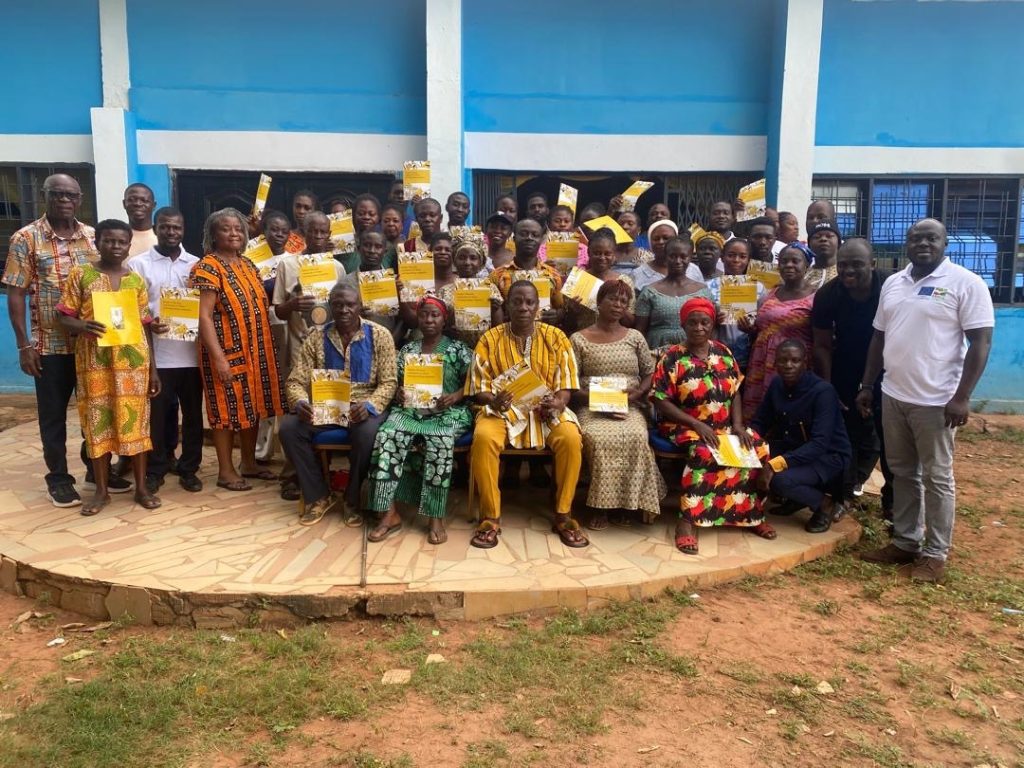
The call followed a two-day peer-learning forum which, according to Wacam, was held on September 7 and 8, 2026, in Busunya and Donkro Nkwanta.

The forum was organised by Wacam with support from the Ghana Energy Transition Consortium (GETC).

Wacam has previously worked with communities in the Nkoranza area on environmental rights, climate change, mining and oil-and-gas concerns, including the application of the Free, Prior and Informed Consent (FPIC) principle.

Communities Urged to Demand a Voice

According to the organisers, community volunteers led discussions on what a just energy transition should mean for communities, with support from facilitators including media practitioner and community rights activist Dominic Adjei Baffour and Centre for Environmental Impact Analysis Executive Director Dr Samuel Obiri.

Wacam’s Executive Director Daniel Owusu-Koranteng, Associate Executive Director Hannah Owusu-Koranteng, and Technical Director and lawyer Kwaku Afari were also reported to have attended.

a492243c 7bc2 4ef6 8224 95b88ea871b5
Nkoranza Communities Call for Fair and Inclusive Energy Transition 13

Participants were told that Ghana’s transition towards cleaner energy is important for reducing pollution and emissions, but that renewable-energy projects must also respect community rights.

The discussion highlighted potential concerns surrounding land acquisition, water resources, livelihoods, compensation and employment.

The participants were also introduced to the mineral requirements of several clean-energy technologies, including solar panels, batteries and electric vehicles.

Minerals such as lithium, copper, bauxite and manganese can play important roles in clean-energy supply chains, raising questions about whether the extraction of those resources will protect communities and ecosystems.

What Makes an Energy Transition “Just”?

The forum distinguished between what organisers described as an unjust transition and a just transition.

An unjust transition, participants were told, could involve land being taken without meaningful consent, inadequate information, poor compensation, environmental pollution and economic opportunities failing to reach affected communities.

A just transition, by contrast, should involve meaningful participation, transparent information, protection of land and water, fair compensation and benefits, and opportunities for women and young people to participate in decision-making.

FPIC Placed at the Centre

A major focus of the forum was reportedly the principle of Free, Prior and Informed Consent (FPIC).

Participants were encouraged to understand that meaningful consent should be free from threats, force or bribery, obtained before a project begins and based on information that communities can understand.

They were also encouraged to ask questions about how proposed projects could affect farmland, water sources, women, farmers and other vulnerable groups.

  • What land and water will be affected?
  • What risks could women and farmers face?
  • What compensation and long-term benefits are guaranteed?
  • Who will prevent pollution and repair environmental damage?
  • Can communities obtain independent legal and technical advice?
  • What happens if a community does not agree to a project?

Women, Youth and Vulnerable Groups

The organisers also stressed that community participation should go beyond traditional leaders or a small group of representatives.

Women and women land users, youth, farmers, fishers, pastoralists, persons with disabilities, traditional leaders and people who could face resettlement should all have opportunities to participate.

The forum’s message was that one meeting with a few community leaders should not automatically be treated as community-wide consent.

Participants were encouraged to document their farms, water resources, agreements, promises and potential environmental harm, while seeking independent advice where necessary.

Ghana’s Energy Transition

The discussion comes as Ghana continues developing its energy-transition agenda.

The Energy Commission has said Ghana’s pathway includes greater energy efficiency, increased renewable-energy generation, electric-vehicle development and the gradual reduction of dependence on thermal generation, while natural gas remains part of the country’s transitional energy strategy.

The Ghana Energy Transition Consortium has also identified financing, technical support, collaboration, youth inclusion and job creation as important components of Ghana’s transition.

For communities such as those in Nkoranza, the debate therefore goes beyond simply changing energy sources.

It also raises the question of who controls land and resources, who benefits from new projects and who bears the environmental and social costs.

The forum concluded with a message attributed to the participating communities:

“No energy future without justice. No project on our land without information, participation, protection, fair benefits and consent.”

Participants reportedly committed to sharing the knowledge gained from the forum with others in their communities.


📲 Stay Connected With GhanaMedia.net

Get verified Ghanaian stories, community voices and important national developments as they happen. Follow GhanaMedia.net on X: @GhanaMedia123 .

Follow GhanaMedia.net on X → @GhanaMedia123

Telecel Presents 1st One Million Cedis to Mother of Eight in M’ahitti Promo

0

Telecel Ghana has presented One Million Cedis to the first monthly winner in the Telecel M’ahitti promo. Adiza Ibrahim, a widowed mother of eight who resides in Prang, a rural community several hours from Ghana’s capital, had received messages about Telecel’s M’ahitti Promo and eventually opted in after her daughter encouraged her to give it a try. She wasn’t expecting to win anything. Certainly not one of the grand prizes. 

edae9964 9aff 4751 807c 1f9073e6c876
Telecel Presents 1st One Million Cedis to Mother of Eight in M’ahitti Promo 15

The presentation ceremony held in Yeji, Bono East Region in the presence of her family, community members and the media was the first time a grand prize was presented within the community of the winner.  Making the presentation, Aneth Muga, Director of Consumer Business Unit of Telecel said, “Adiza’s story is an incredible one. It is a life transforming story, and we are super excited to present the first million in the Telecel M’ahitti Promo to her. We launched this promo in July to appreciate our customers with daily, weekly and monthly rewards. Most importantly we knew this promo would transform the lives of 3 grand prize winners.”

When Adiza Ibrahim received a call telling her she had won GHS 1 million, her first reaction was disbelief. There was no way, she thought, that the call could be real. 

It took a personal visit to convince her. Officials from Telecel made the long journey to her community to meet Adiza and her family and confirm the news in person. That was when it finally began to sink in: She had just become a millionaire. Her story makes the win even more remarkable.

For years, Adiza has worked hard to provide for her family, including cooking for children at a school in their community as she sought to make ends meet. Raising eight children has come with its own challenges, and at different points, some of her children have had to stay out of school because she could not afford to continue their education.

Speaking about what the GHC 1 million means to her, Adiza says one of her biggest priorities is getting her children back into school and ensuring that they can continue their education for as long as they desire. She also plans to establish a business for herself and another for her eldest child, who has completed an apprenticeship.

“This is very good news for me and my family. By God’s grace, because of this win, I can now make sure all my kids go through school successfully. Our lives will change!” She said excitedly. 

For Adiza, becoming a millionaire was never something she imagined for herself. She has repeatedly spoken about how blessed she feels, especially because the win came from simply opting into a promotion,she had no expectation of winning.

As one of the largest consumer reward campaigns in Ghana’s telecom sector, the Telecel M’ahitti Promo will reward 100 customers daily with GH¢100 each, up to 6 customers weekly with GH¢20,000 each, and now two grand prize winners with GH¢1 million each in September and October.

Supervised by the National Lottery Authority – Caritas, all Telecel customers can participate for free by dialling *500#, texting WIN to 500, or activating the promotion through the Telecel Play App. Airtime recharges, bundle purchases and Telecel Cash deposits of GH¢10 or more earn points, with bonus entries for customers who use the Telecel Play App and Telecel Cash.

From cooking for schoolchildren to support her family, to receiving GHS 1 million that could help put her own children back in school, Adiza’s transformation story is one of an unexpected opportunity arriving at just the right time.

Media Mogul Peace Hyde appointed Director of Global Strategic Partnerships for Time Africa

0
Screenshot

Award winning media maven Peace Hyde has achieved another remarkable feat in her illustrious media career by joining the prestigious Time Magazine brand as the Director of Global Strategic Partnerships for Time Africa.

For 100+ years, TIME has told the story of the world through the leaders who move it. The brand covers the global leaders, icons, innovators and visionaries who are building a better future, driving impact and making change, while providing the world with the trustworthy and credible journalism TIME is known for. TIME Africa is the official African edition of the prestigious brand that carries the same ethos.

img 5574
Media Mogul Peace Hyde appointed Director of Global Strategic Partnerships for Time Africa 17

The new position comes after Hyde’s ten-year tenure as the Head of Digital Media and Partnerships and West Africa Correspondent for Forbes Africa during which she was responsible for creating award winning shows for the brand including three seasons of My Worst Day for Forbes Africa and two seasons of Against All Odds for Forbes Woman Africa.

In 2021 Hyde created and executive produced the global hit reality tv series, Young, Famous and African, which is currently in its fourth season and is consistently a Netflix top 10 hit across 40 countries on the Netflix platform. The show has won two South African Film and Television Awards as well as nominated for an international emmy.

Hyde’s appointment reflects the continued focus on strengthening strategic relationships and accelerating growth for the Time Africa brand.

“It is an honour to join such a prestigious brand as Time Africa as well as the other global brands under the GVP umbrella. Having spent many years working with some of the world’s most prestigious media brands, the scale, stability and ambition of GVP really resonates with me. I see a real opportunity for the Time Africa brand to grow not only through existing tent pole events but also by diversifying into new original IP that resonates with the African continent.” – Peace Hyde.

Bethlyn Arthur’s Sickle Cell Journey: Turning a Health Battle Into a Voice of Hope

0

ACCRA, GHANA — Bethlyn Nana Adjoa Arthur is using her personal experience with sickle-cell disease to strengthen conversations around awareness, resilience, healthcare and the realities faced by people living with the condition.

Arthur is a certified midwife, public health professional, international speaker and patient voice advocate whose work connects lived experience, healthcare knowledge and public health action.

img 5411
BETHLYN ARTHUR
HER STORY. HER STRENGTH. OUR INSPIRATION.

According to information verified by GhanaNews.org, Arthur is currently receiving intensive care following a severe sickle-cell crisis. Her experience has brought renewed attention to the reality behind sickle-cell awareness campaigns and the continuing need for education, empathy and better support for people living with the condition.

Her story comes during Sickle Cell Awareness Month, a period that provides an opportunity to move beyond slogans and examine what living with sickle-cell disease actually means for patients and their families.

Beyond Awareness: The Reality of Sickle Cell Disease

Sickle-cell disease is an inherited blood disorder that affects haemoglobin and causes red blood cells to become rigid and sickle-shaped. These cells can obstruct blood flow and contribute to serious complications, including severe pain, anaemia, infections and stroke.

The World Health Organization says an estimated 7.74 million people were living with sickle-cell disease globally in 2021, with sub-Saharan Africa accounting for nearly 80 percent of the global burden.

The condition therefore requires more than periodic awareness campaigns. It requires early diagnosis, appropriate medical care, access to treatment, informed families and sustained public-health education.

A Professional Who Also Understands the Patient’s Reality

Arthur’s background gives her advocacy a distinctive perspective. As a certified midwife and public health professional, she understands healthcare from a professional standpoint while also speaking from lived experience as a patient and advocate.

That combination allows her to connect medical knowledge with the human realities that patients and families encounter outside clinical settings.

Her profile describes her as an international speaker and patient voice advocate working to transform how the world understands sickle-cell disease.

GhanaNews.org’s broader commitment to public-interest journalism includes health reporting designed to help readers understand issues affecting families, healthcare professionals and communities. Explore more GhanaNews.org coverage.

Why Her Story Matters

Arthur’s journey provides an opportunity to discuss issues that often receive limited attention outside awareness campaigns, including genotype decisions, treatment realities, family life, resilience and the emotional demands of living with a chronic condition.

For families, conversations about genotype and sickle-cell disease can influence important decisions before and after childbirth. For patients, access to reliable information and appropriate healthcare can be critical to managing the condition and reducing complications.

The Ghana Health Service has previously highlighted public education, newborn screening and early intervention as important parts of efforts to improve outcomes for people affected by sickle-cell disease.

That emphasis is consistent with the need for awareness to continue beyond a designated awareness month.

From Personal Struggle to Public Advocacy

Arthur’s story demonstrates how personal health experiences can become powerful platforms for public education.

Rather than allowing the condition to define her solely through illness, she has positioned her experience within a broader conversation about healthcare, patient voices, education and public health.

Her advocacy also reflects a wider principle of responsible health communication: people living with chronic conditions should not be viewed only through statistics or medical terminology. Their experiences, voices and perspectives matter.

Sickle Cell Awareness Must Continue Beyond September

The Ghana Health Service has emphasised awareness, newborn screening and early intervention in its public-health messaging around sickle-cell disease.

The need for continued education is significant because sickle-cell disease is a lifelong condition whose complications can vary considerably from one person to another.

The U.S. Centers for Disease Control and Prevention notes that sickle-cell disease can cause severe pain and other complications and that management involves preventing and treating complications through appropriate medical care.

For advocates such as Arthur, the challenge is therefore not simply to make people aware that sickle-cell disease exists. It is to help society understand the people living with it.

A Voice of Hope

Bethlyn Nana Adjoa Arthur’s journey is ultimately a story about more than illness. It is about resilience, professional knowledge, patient advocacy and the determination to turn lived experience into something that can educate and inspire others.

At a time when sickle-cell awareness is receiving renewed attention, her story offers an important reminder: behind every statistic is a person, a family and a lived experience.

Her message can therefore extend far beyond September — encouraging greater understanding, informed healthcare decisions and stronger support for people living with sickle-cell disease.

For more verified health, human-interest and public-interest stories, follow GhanaNews.org.

Enoch Ansong Raises Alarm Over Alleged 400GB MTN Data Usage in 14 Days

0

Ghanaian tech creator and GhanaNews.org anchor publisher Enoch Ansong, popularly known as AiWithEnoch, has publicly questioned an alleged 400GB data usage recorded on his MTN account within 14 days.

Ghanaian tech creator Enoch Ansong, popularly known as AiWithEnoch, has raised concerns over an alleged 400GB mobile-data usage within 14 days, following an interaction with MTN Ghana’s customer-support team.

img 4286
Enoch Ansong Raises Alarm Over Alleged 400GB MTN Data Usage in 14 Days 20

Ansong, who is also an anchor publisher with GhanaNews.org, shared his frustration in a social-media video, saying he had been told that he had exhausted approximately 400GB of data over the 14-day period.

“MTN Ghana is trying to gaslight me that I have finished 400 gig in 14 days,” Ansong said in the video, expressing disbelief over the reported figure.

The complaint has sparked discussion among Ghanaian internet users, particularly those who have experienced concerns about unusually rapid data depletion.

A wider concern among MTN users

Although Ansong’s specific case has not been independently verified by GhanaNews.org, his complaint comes amid broader concerns from some Ghanaian consumers about mobile-data consumption and the difficulty of obtaining satisfactory explanations when data appears to disappear unusually quickly.

Recent discussions among Ghanaian mobile users have included complaints about large data bundles being depleted faster than expected and dissatisfaction with customer-support responses. 

The issue is particularly significant for heavy data users, including content creators, developers, online businesses and professionals whose work depends heavily on mobile internet.

What MTN Ghana says about complaints

MTN Ghana’s official customer-support channels allow customers to raise complaints through its call centre, WhatsApp, email, social-media channels and the myMTN app. 

The National Communications Authority has also previously directed consumers experiencing anomalies with mobile-data services to first report the matter to their service provider and escalate unresolved complaints to the regulator. 

The NCA’s directives followed concerns over data-bundle allocations and billing, including measures requiring operators to improve data value and monitoring of billing integrity. 

Enoch’s complaint could reopen a national conversation

For Ansong, the issue goes beyond his personal account.

His public complaint has given other users who believe they have experienced similar problems an opportunity to speak about their own experiences.

The central question is whether customers who dispute unusually high data consumption can receive a clear, transparent breakdown showing exactly how their data was consumed.

At the time of publication, GhanaNews.org has not independently established that MTN Ghana incorrectly deducted 400GB from Ansong’s account, and the allegation should therefore be treated as a customer complaint awaiting clarification.

GhanaNews.org has also not found an official public response from MTN Ghana specifically addressing Ansong’s 400GB allegation.

The platform will continue to follow the matter and update readers should MTN Ghana provide a substantive response.

Young Man Reportedly Dies on Kumasi–Wa Bus, Identity Sought for Family Contact

0

A young man believed to be between 30 and 33 years old has reportedly died while travelling on a bus from Kumasi towards Wa, with authorities seeking assistance to trace his family.

img 4125
Young Man Reportedly Dies on Kumasi–Wa Bus, Identity Sought for Family Contact 22

According to information attributed to a police officer and shared by Upper West Media, the man was travelling on the Kumasi–Wa route when a fellow passenger reportedly discovered that he was unresponsive shortly after the bus passed Poyentanga.

He has been identified in the preliminary information as Dabuo Francis, although his identity and other personal details have not been independently confirmed by GhanaNews.org.

The circumstances surrounding his death have not yet been established. The information available at the time of publication does not state whether he had shown signs of illness before boarding the bus or what caused his death.

The appeal is therefore focused on helping authorities and those assisting with the case to locate the man’s relatives.

Anyone who believes they may know Dabuo Francis, or who can help identify and reach his family, is encouraged to contact the nearest police station and provide relevant information.

Poyentanga is located in the Wa West District of the Upper West Region. The area has previously recorded serious incidents along the Wa–Sawla highway, including a fatal road crash in 2024 that claimed three lives, according to the Ghana News Agency.

GhanaNews.org will update this report if further information becomes available from the police or other authoritative sources concerning the man’s identity, family or the circumstances surrounding his death.

For more Ghana news and breaking developments, follow GhanaNews.org and explore our latest stories.

Our Partners: GhanaNews.org works with trusted media and content partners to broaden access to news and information across Ghana.