




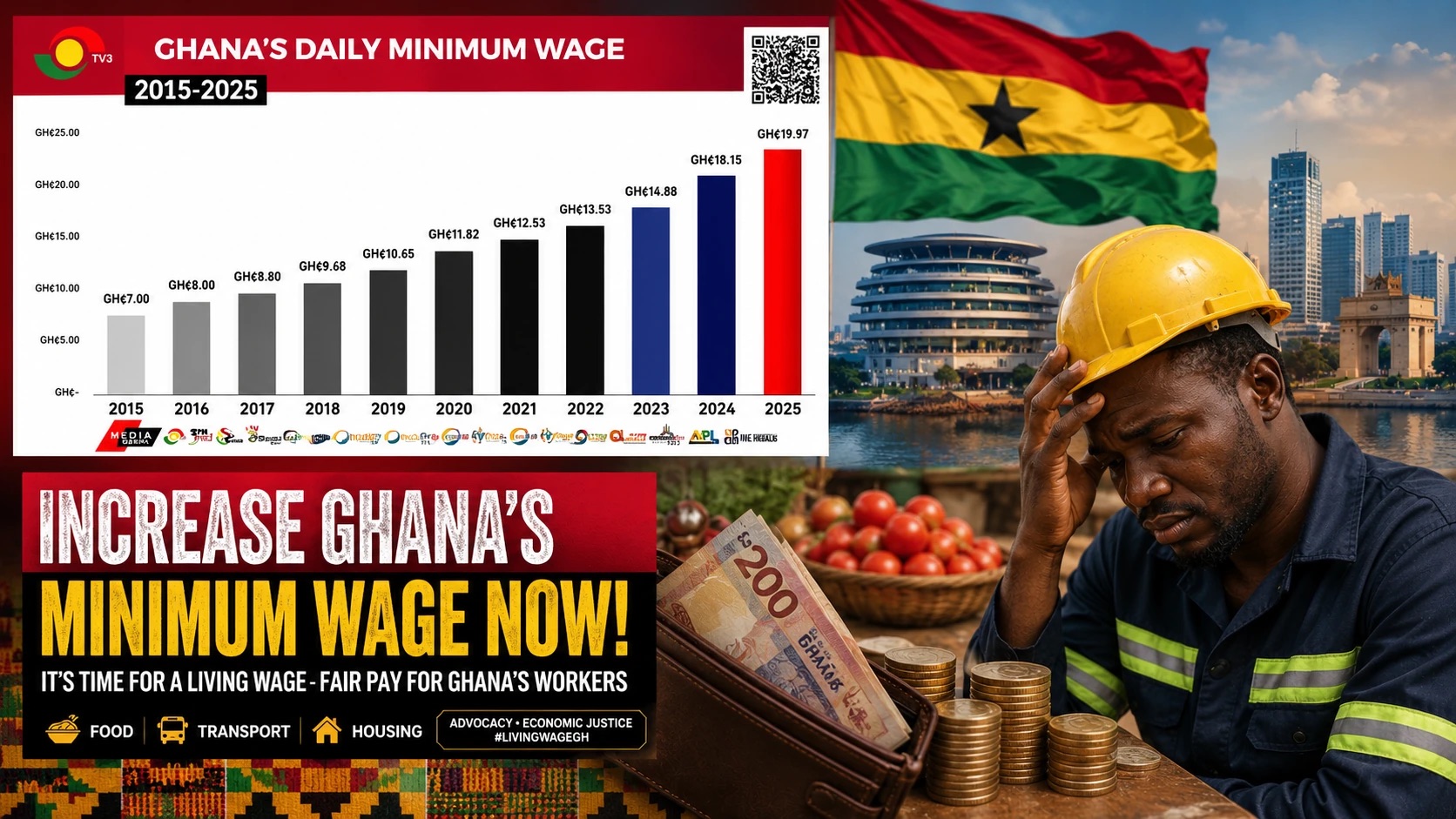
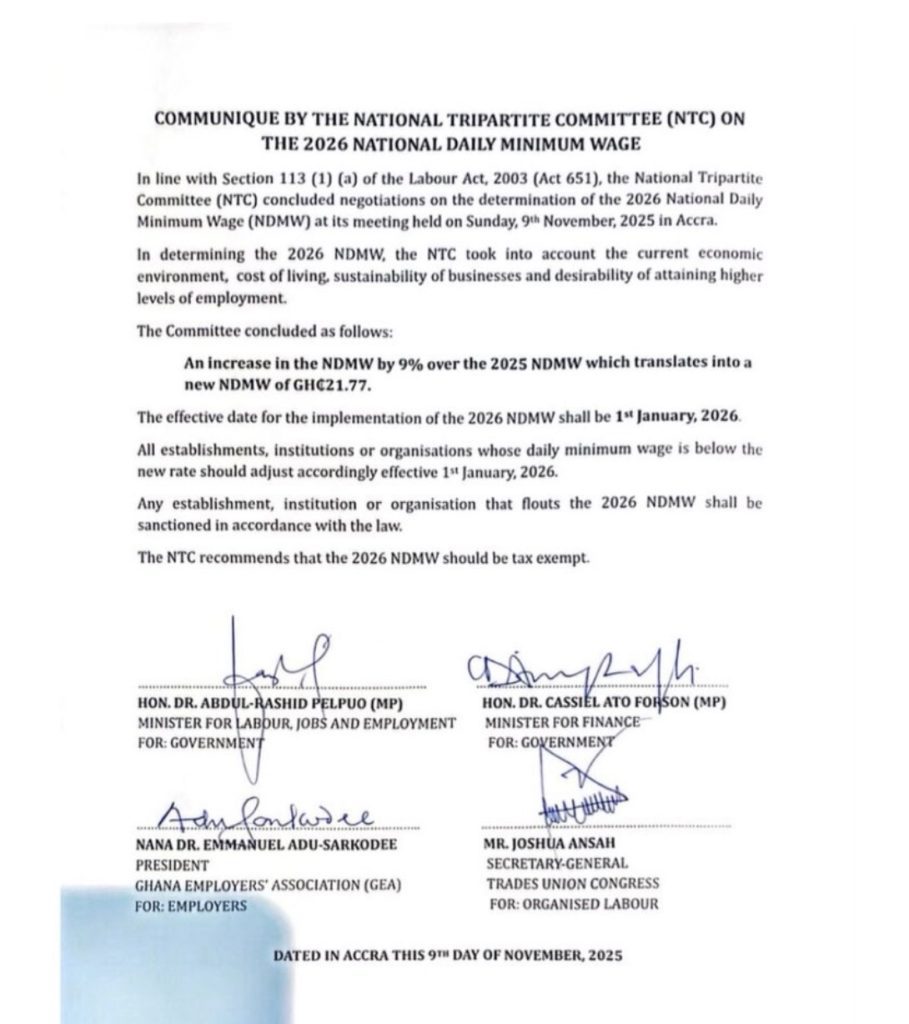
Ghana’s daily minimum wage has increased to GH¢21.77 for 2026, but many workers believe the adjustment still falls far short of what is needed to live with dignity.
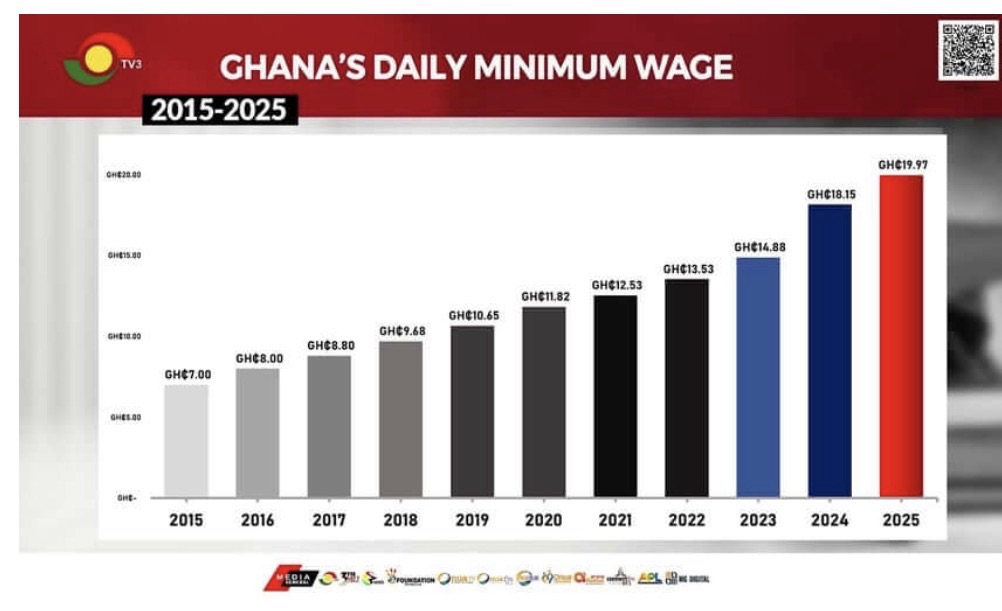
The National Tripartite Committee approved a 9% increase from the previous GH¢19.97 daily rate, with the new wage taking effect on January 1, 2026. While the increase has been welcomed by labour groups, many argue it does little to offset the growing cost of food, transport, rent, healthcare, utilities and education.

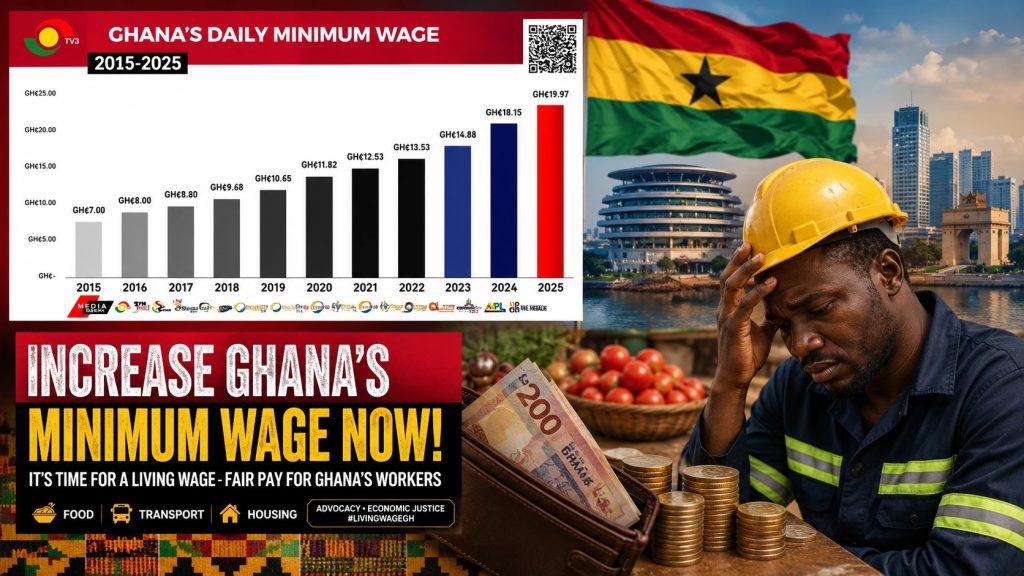
At the current rate, a worker earning the minimum wage for approximately 27 working days receives about GH¢588 per month. In cities such as Accra and Kumasi, where living costs continue to rise, labour advocates argue that this income is insufficient to cover even the most basic household expenses.
The debate has therefore shifted beyond annual wage adjustments to a broader discussion about adopting a living wage framework. Such a system would determine wages based on the actual cost of maintaining a reasonable standard of living rather than setting only a legal minimum.

According to labour organisations, employment should provide financial security rather than force workers to choose between transportation, food, rent or healthcare. The Trade Union Congress (TUC) has consistently advocated policies that consider housing, education, healthcare and transportation when determining workers’ pay.
Supporters of higher wages argue that improving workers’ purchasing power can strengthen domestic economic activity, while business groups caution that sharp wage increases may place additional pressure on small and medium-sized enterprises already facing high operating costs.
Economic analysts say any long-term wage policy should be accompanied by measures that reduce inflation, improve productivity, support businesses and strengthen enforcement of labour laws. Without addressing the broader cost of living, annual wage increases alone may continue to lose value over time.

For many Ghanaians, the debate is no longer simply about increasing the minimum wage but ensuring that full-time employment provides enough income to live with dignity. As the conversation continues, policymakers face growing calls to balance economic growth with the welfare of the country’s workforce.
For more background on economic policy, visit Government Tracker. Read explanatory reports in Ghana Explains for additional analysis on labour and economic issues.